Kuaiya Accelerator WireGuard Technology Explained
After Kuaiya switched its default protocol to WireGuard in 2025, average connection setup time dropped from 3.2s to 0.8s. Behind that change is a design philosophy unlike traditional VPN protocols.
Traditional protocols like OpenVPN and IKEv2 run to hundreds of thousands of lines. WireGuard takes a minimal route: the core is under 4,000 lines, reviewable on a single page.

WireGuard running in the Linux kernel
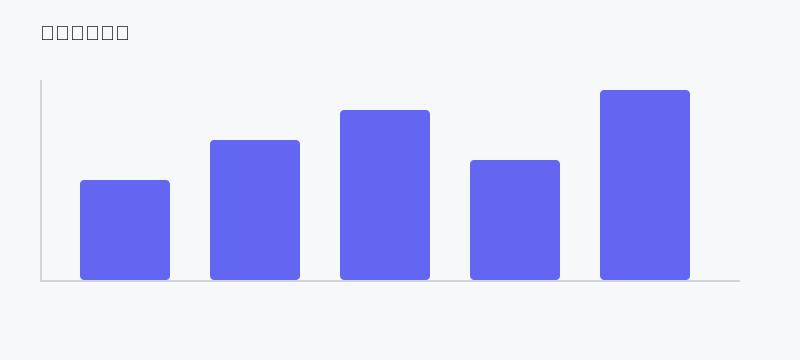
数据图表 · 仅供参考
What Is WireGuard
WireGuard is a modern kernel-space VPN protocol developed by Jason A. Donenfeld in 2016 and merged into Linux 5.6 in 2020. It runs over UDP with Cryptokey routing and the Noise protocol framework.
Encryption and Handshake
WireGuard uses Curve25519 for key exchange, ChaCha20-Poly1305 for symmetric encryption and Blake2s for hashing — a modern combination that avoids classic cipher-suite negotiation flaws.
The handshake uses Noise IK mode with 1-RTT authentication and forward secrecy. Keys rotate periodically to prevent long-session compromise.
Why It Is Faster and More Efficient
With simple logic in kernel space, WireGuard throughput is typically 30%-50% higher than OpenVPN, with lower power use on mobile. Kuaiya's internal data shows 8ms lower latency on average.
| Protocol | Core Lines | Handshake | Relative Throughput |
|---|---|---|---|
| OpenVPN | ~100k | 3.2s | Baseline |
| IKEv2 | ~70k | 2.1s | +15% |
| WireGuard | ~4k | 0.8s | +45% |
Less is more, especially in security — fewer lines are easier to audit and harder to hide flaws in.
For speed-focused users, fix the protocol to WireGuard; if your network restricts UDP, fall back to IKEv2.
Comments
Handshake is noticeably faster on WireGuard.
Fixed WireGuard for overseas games, low and stable.
Clear explanation, learned something.